
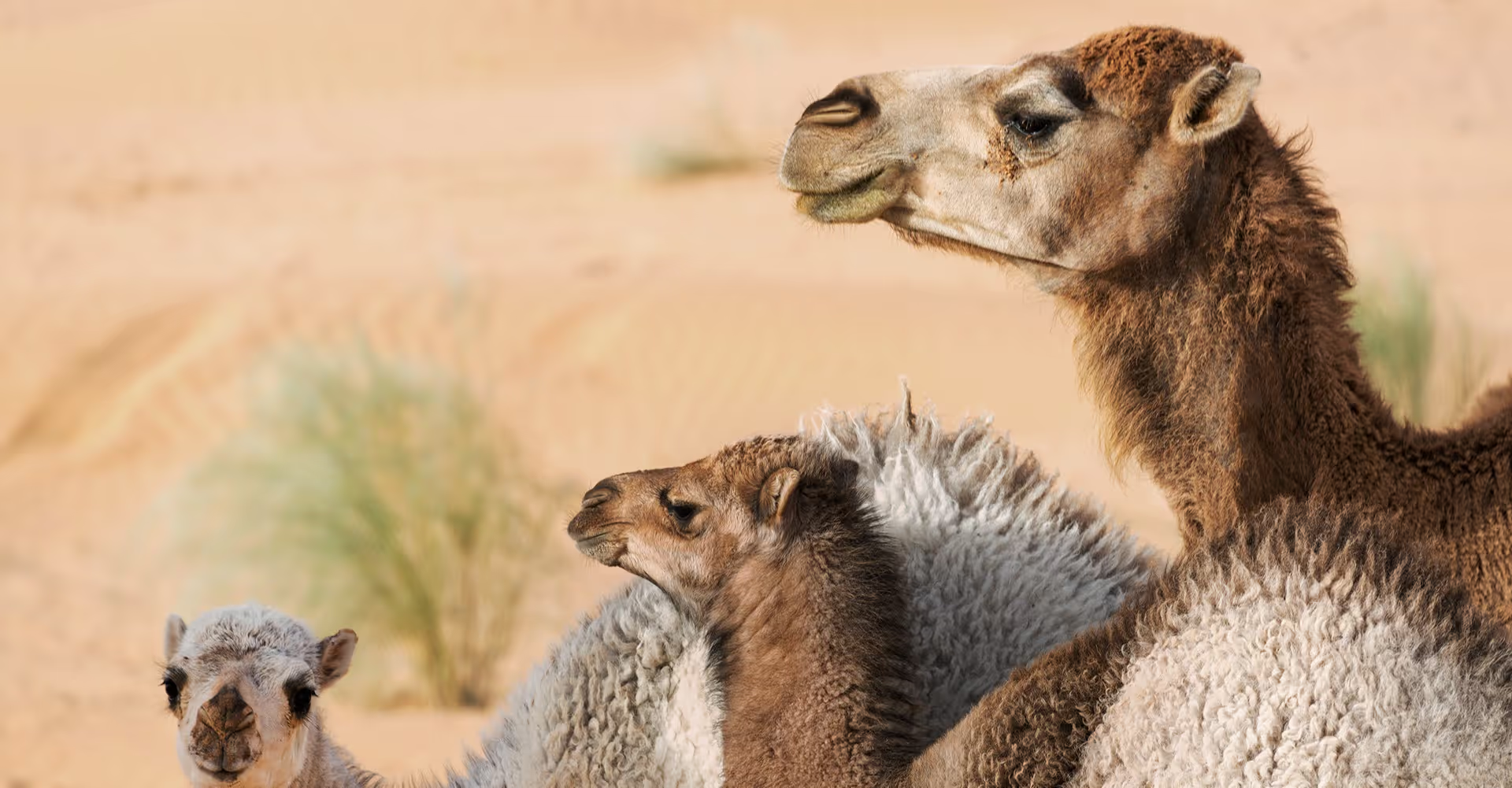

The Arabian camel, also known as the one-humped camel or dromedary, is a remarkable member of the camelid family, which includes the vicuña, llama, alpaca, guanaco, and the Bactrian camel.


But unlike its relatives, the Arabian camel has been a lifeline across the unforgiving deserts of the Middle East and North Africa.
The Arabian camels thrive in vast drylands and desert environments, primarily in the Arabian Peninsula and North Africa. Excellently adapted to harsh landscapes, showing remarkable resilience to climate change. They are referred to as the “resource of the future”.

Over millennia, this extraordinary creature has evolved into one of nature’s most efficient climate survivors:
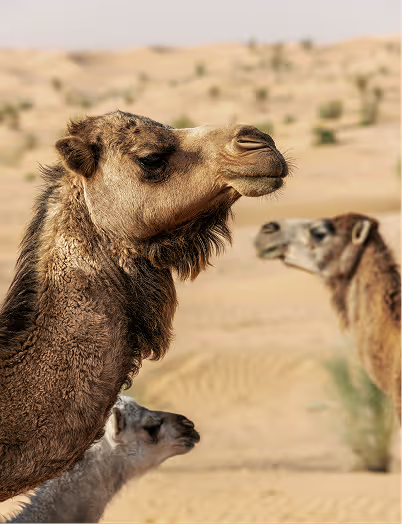
Its ecological footprint is remarkably low. Its ability to adapt, regenerate, and support human life in extreme conditions makes the Arabian camel not only a king of the desert but a living emblem of sustainability.
The Arabian camel's coat is not only a natural marvel, but it’s also a textile revelation. Shed each spring naturally, the fibre is composed of a fine, insulating undercoat, making it:
Each strand is a testament to evolution, shaped by climate, honed by nature, and ready to be reimagined into fine textiles.
At NOUKK, we honour this gift by repurposing every part of the fibre with intention, ensuring nothing is wasted, and everything is respected.


Each strand is a testament to evolution, shaped by climate, honed by nature, and ready to be reimagined into fine textiles.
At NOUKK, we honour this gift by repurposing every part of the fibre with intention, ensuring nothing is wasted, and everything is respected.



